The Anatomy of a Wedding Dress: A Bride’s Guide to Understanding Gown Construction
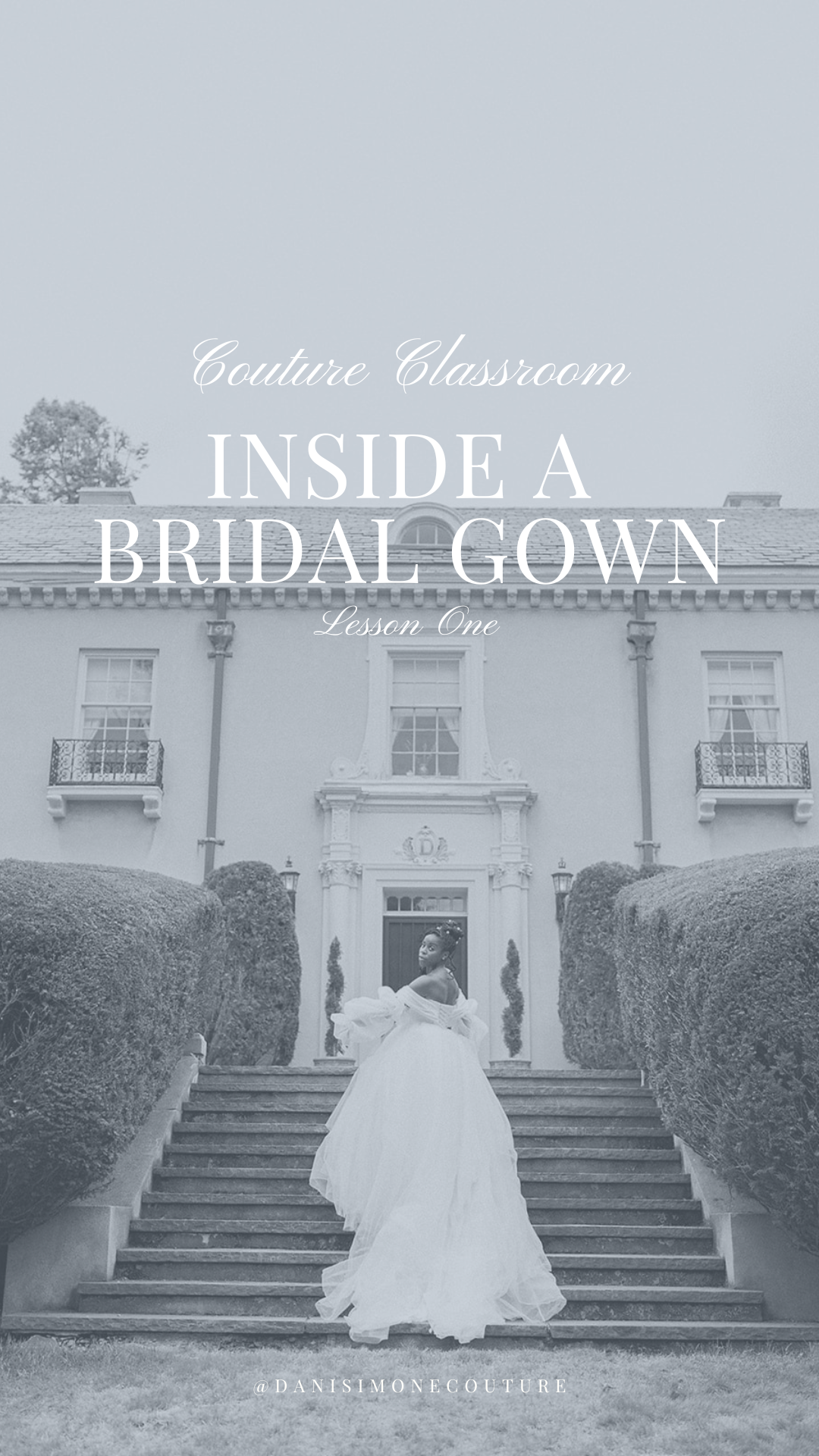
Hello Darling,
Choosing a wedding dress can feel overwhelming—especially when you’re surrounded by so many silhouettes, fabrics, and styles, all at once. Before trends, before fittings, and before final decisions, there is something that quietly changes the entire experience: understanding how a wedding dress is made.
This guide introduces the anatomy of a wedding dress—the foundational elements that come together to create the gown you see, feel, and move in. When you understand these parts, choosing a dress becomes less about guessing, and more about clarity.
This is the first lesson in Couture Classroom, a series designed to help brides feel informed, confident, and supported throughout their dress journey.
The Anatomy of a Wedding Dress
Every bridal gown is composed of thoughtfully designed components. Each part plays a role in how the dress fits, moves, photographs, and feels on your body. Below is an introduction to the key elements you’ll encounter when trying on wedding dresses.
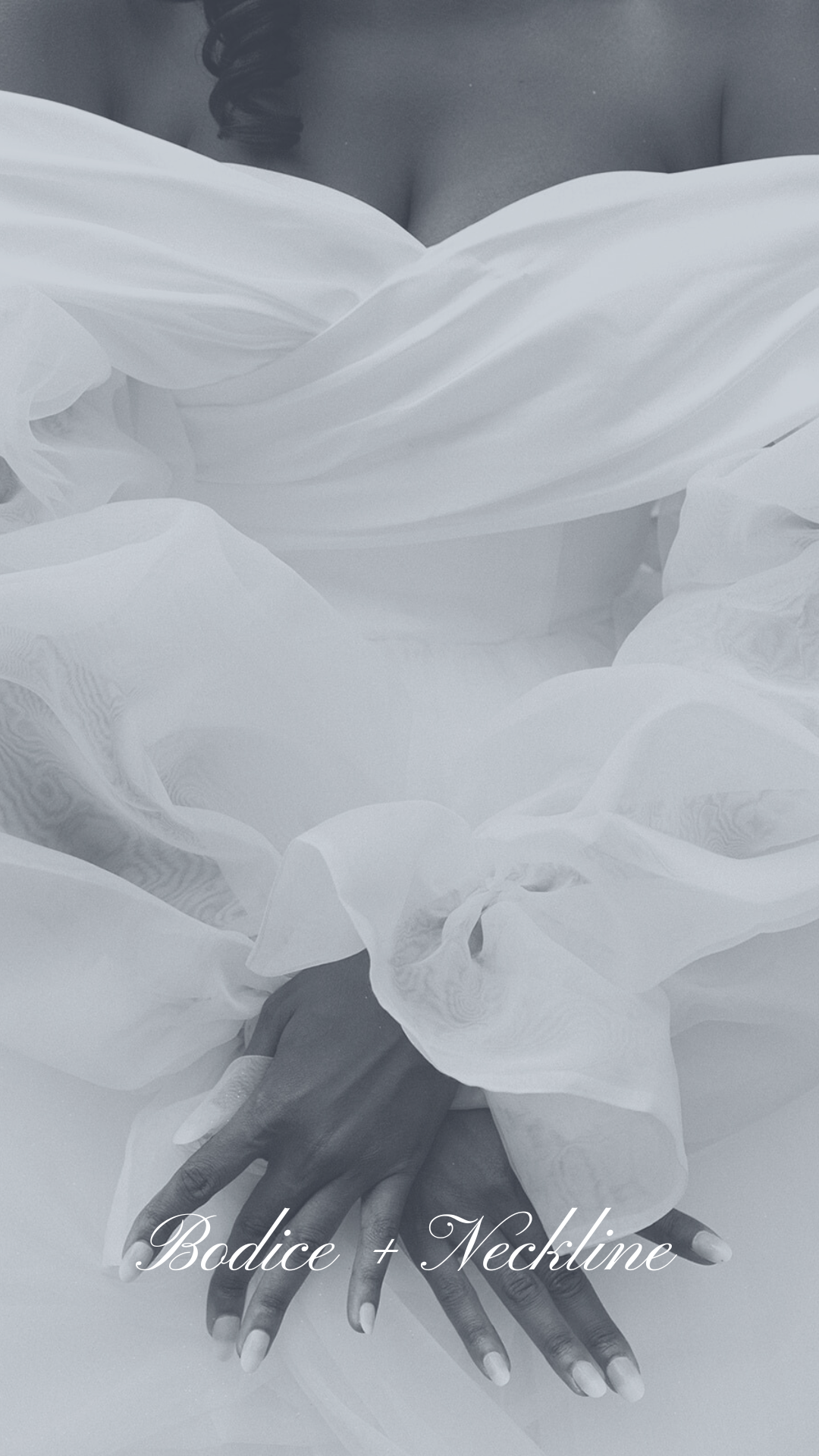
The Bodice and Neckline
The bodice is the structured upper portion of the dress. It shapes and supports the torso, holding the gown in place while creating the foundation for fit and comfort. Inside the bodice is where couture construction truly lives—lining, boning, and internal support that allow a dress to feel secure without feeling restrictive.
The neckline frames the face, shoulders, and collarbone. Whether subtle or dramatic, the neckline influences the overall mood of the gown and helps balance proportions throughout the design.
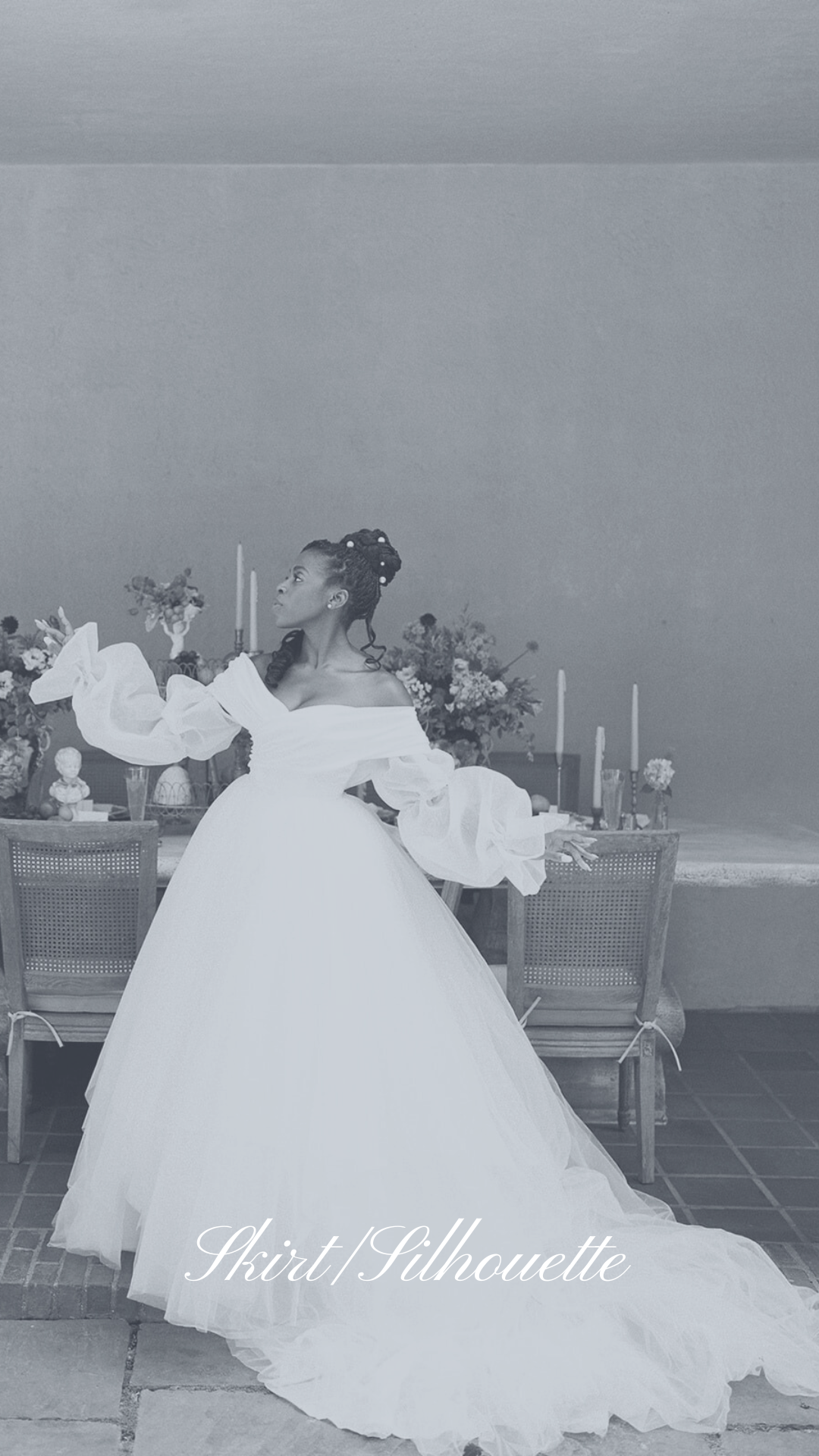
The Skirt (Silhouette)
The skirt, often referred to as the silhouette, defines the overall shape of the wedding dress. This is what you notice first from across the room—whether the gown flows softly, hugs the body, or creates volume and presence.
The silhouette affects movement, weight, and comfort, as well as how the dress photographs while walking, turning, or dancing. Choosing a silhouette that aligns with both your style and your wedding setting is an important part of the process.
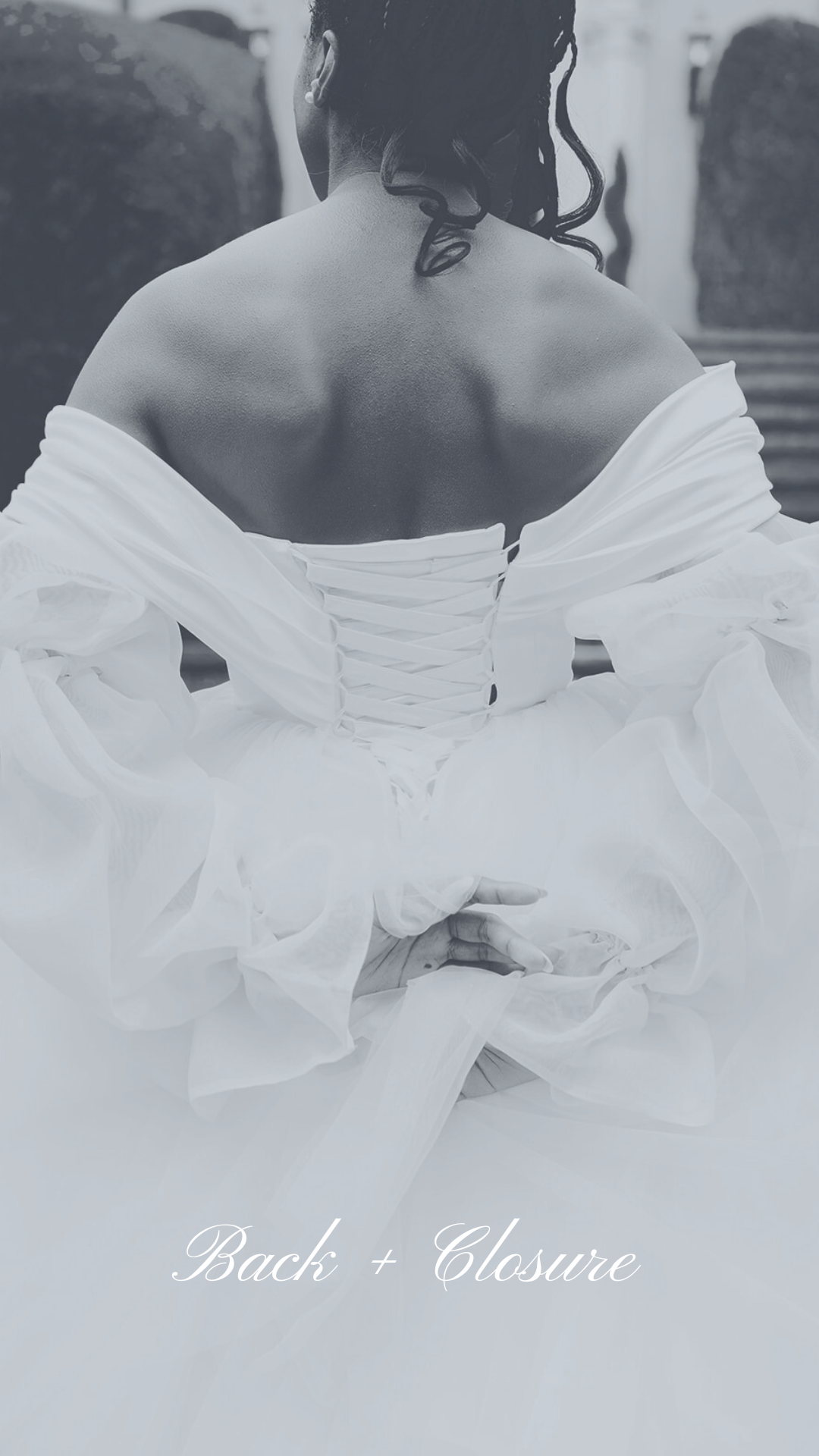
The Back and Closure
The back of a wedding dress often leaves the final impression. From buttoned details to open backs or structured finishes, this element balances the front of the gown and contributes to its overall elegance.
The closure—whether buttons, zippers, corsetry, or ties—is both functional and beautiful. Closures secure the dress while quietly supporting its shape and fit throughout the day.
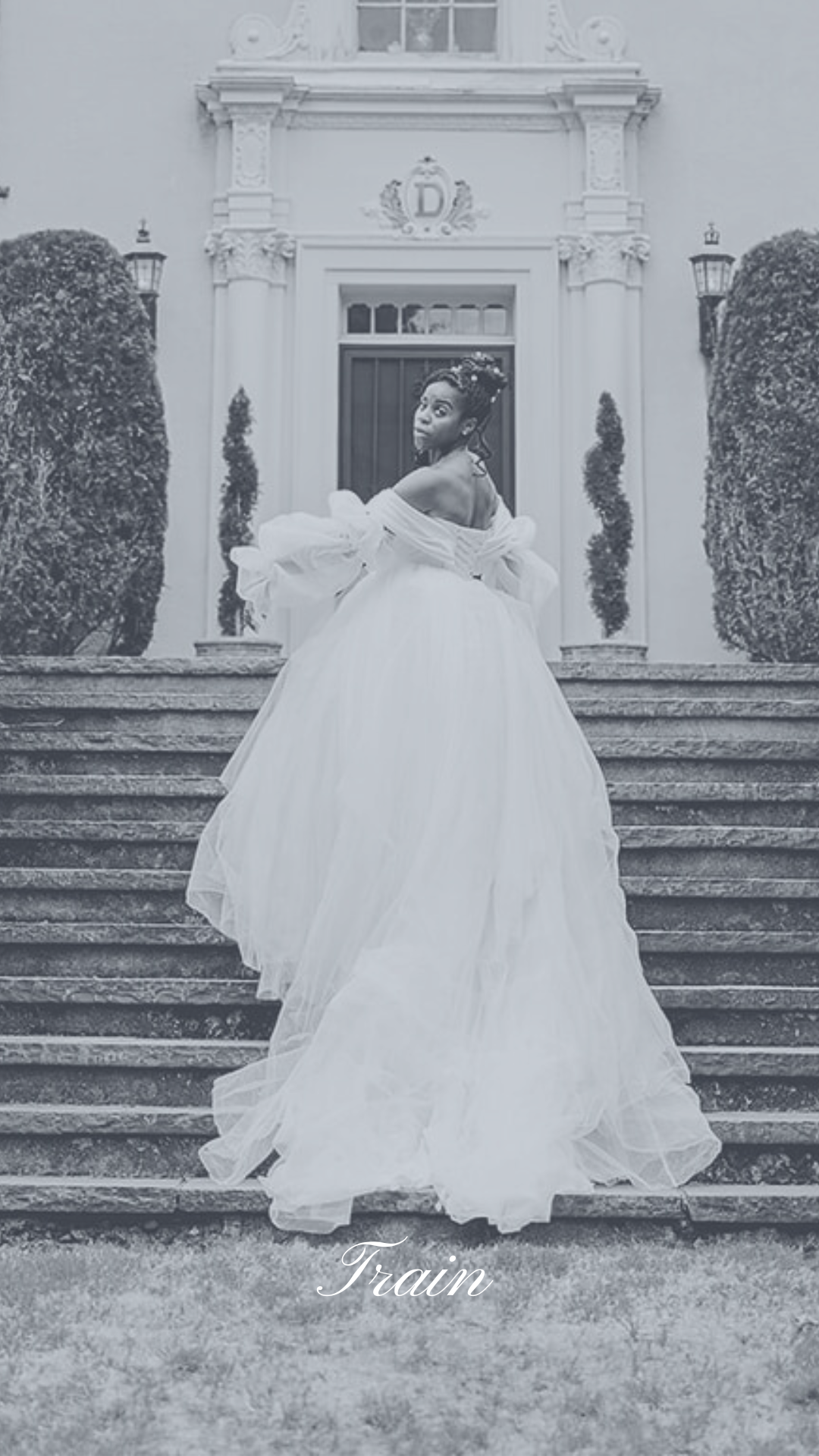
The Train
The train extends the story of the gown beyond the body. It can be subtle or dramatic, traditional or modern, but it always influences how the dress feels in motion.
From sweep and chapel trains to longer ceremonial styles, the length and weight of a train affect both movement and memory—how the dress flows behind you as you walk, and how it’s remembered in photographs.
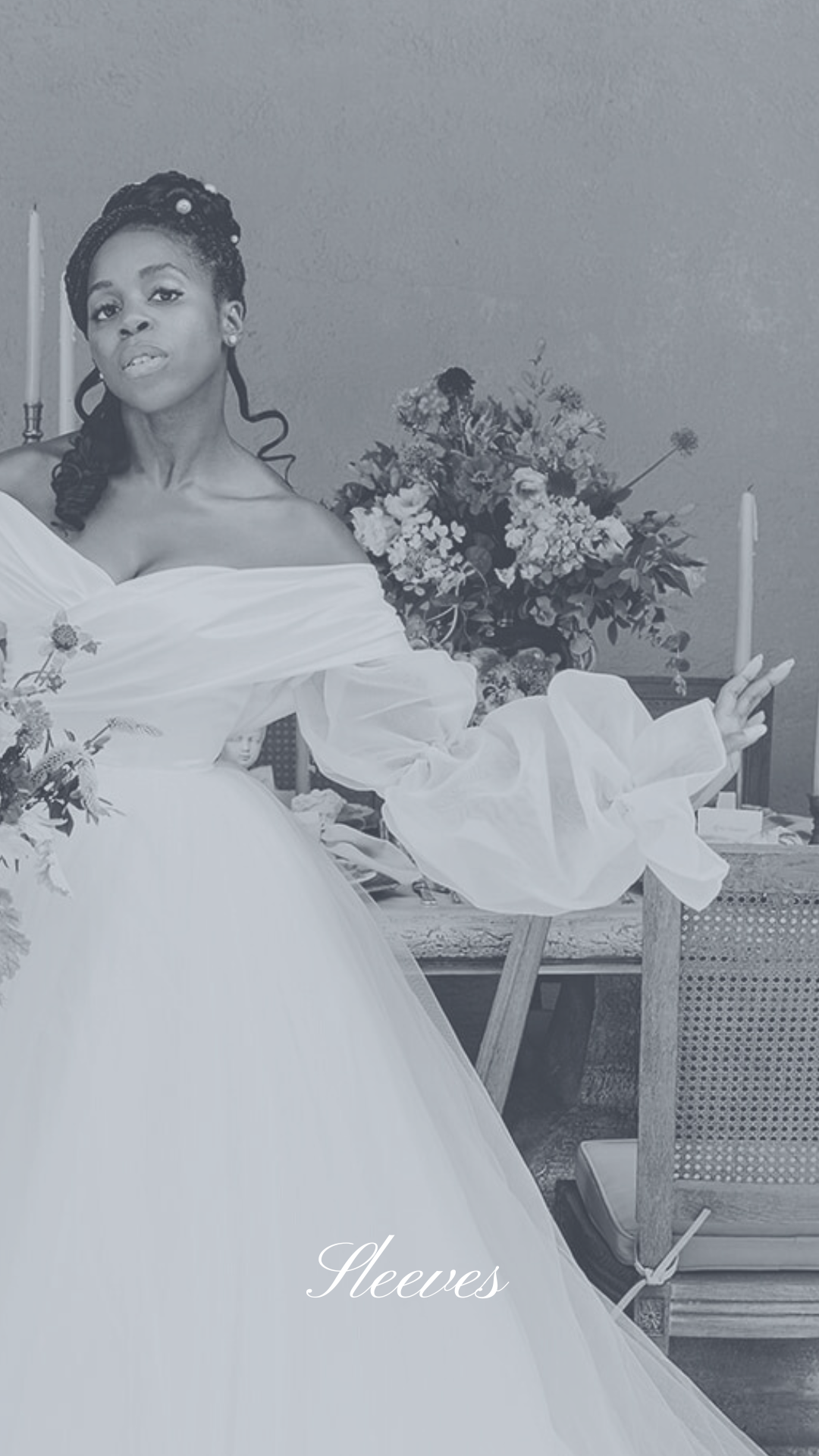
Sleeves (Optional)
Sleeves are typically sewn into a gown as part of its permanent structure. They can add softness, coverage, or architectural interest, while also influencing how the dress moves with the arms.
In some designs, sleeves may be detachable, allowing the bride to choose between wearing sleeves or a strapless look. This offers flexibility while preserving the integrity of the gown’s design.
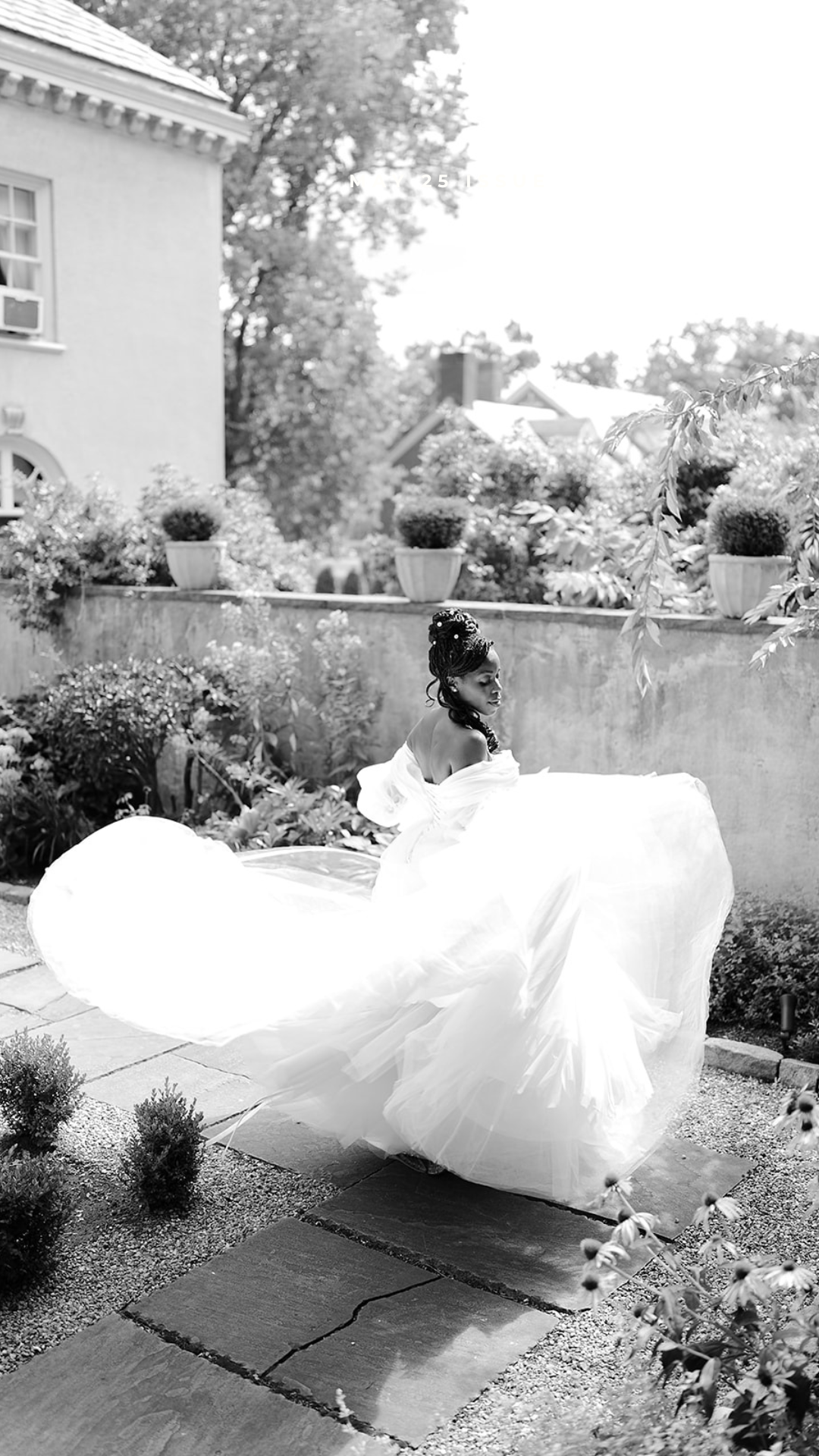
Anatomy in Practice
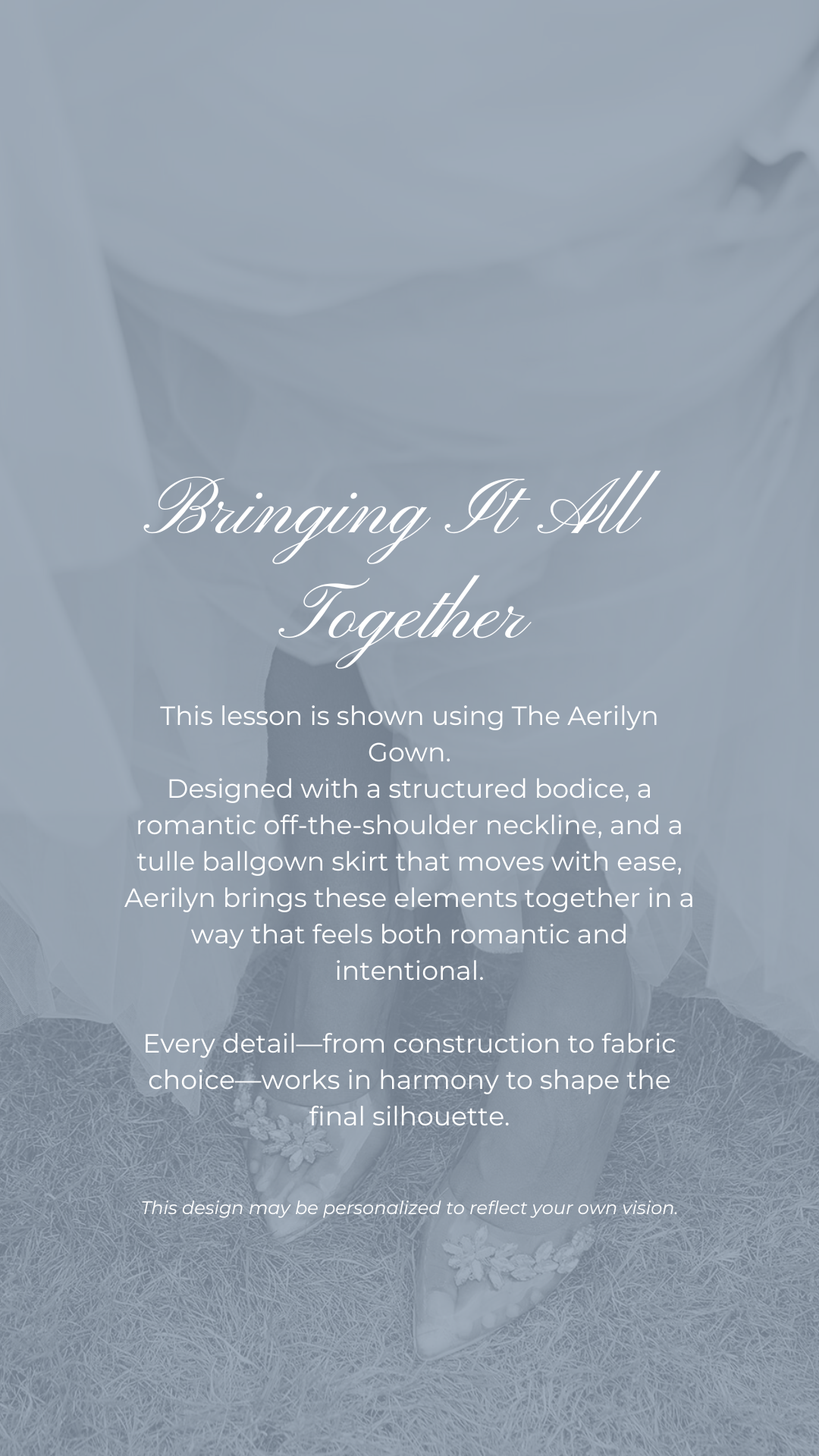
The gown featured throughout this guide is Arlen, a design created to demonstrate how each part of a wedding dress works together. Its structured bodice, balanced neckline, and full skirt illustrate how thoughtful construction shapes the final silhouette.
Every element—from fabric choice to internal structure—plays a role in creating a gown that feels intentional, romantic, and wearable.
Why Understanding Gown Construction Matters
When brides understand the anatomy of a wedding dress, the shopping experience changes. You begin to recognize why certain gowns feel right, why others don’t, and how small design differences can have a meaningful impact.
This knowledge allows you to choose a dress not just for how it looks on the hanger, but for how it supports you, moves with you, and reflects your vision.
Future Couture Classroom lessons will explore each element in greater depth—so you can continue learning as you move closer to finding your gown.
From New England With Love,
🩵 Dani Simone